

Saroyan on Screen - Saroyan & MGM
 Welcome to Saroyan on Screen, a year-long look at the works of William Saroyan put to film and television. I’m your host, archivist Chris Garcia.
William Saroyan was a massive figure in popular culture from the mid-1930s until his death in 1981. He was first known as a writer of short stories, then as a playwright, novelist, and memoirist. Lesser known were his forays into painting, songwriting, and screenplays. His works brought to life the Armenian-American immigrant experience. His parents immigrated from Bitlis, Armenia, and came to America with brief stops in New York, and Fresno. Eventually, the family settled in San Jose. Saroyan’s father, Armenak, died there in 1911, and Saroyan was sent to the Fred Finch orphanage in Oakland, CA. His mother took him back five years later and moved the family to Fresno, where William had been born.
William would sell his first stories at the end of the 1920s, but was irregularly published until 1934, when Story Magazine published The Daring Young Man on the Flying Trapeze in their February, 1934, issue. That story would serve as the starting point for his first collection, The Daring Young Man on the Flying Trapeze and other stories, which sold well. He followed that up with seven more collections before the start of World War II.
His first play, My Heart’s in the Highlands, came to Browadway in 1939, and was a fair success. It was his second play, The Time of Your Life, that cemented him as a Broadway legend. He won the Pulitzer Prize and the New York Drama Critics award for the play, which was later turned into a film we will be talking about in a future epsidoe.
His first two films share an origin story. The hero, of course, is William Saroyan, and the villain is, well, might be, Louis B. Mayer.
Mayer was one of the three producers who combined forces to form MGM, or Metro Goldwyn Mayer. Despite being listed last, Mayer is often seen as the driving force behind MGM’s development into the Hollywood prestige studio that all other American film studios aspired to be. Mayer assembled an incredible production team including legendary Hollywood figures like Irving Thalberg, Bud Schulberg, and Joe Schenk, not to mention behind-the-camera talents like Busby Berkley, King Vidor, Victor Fleming, and Clarence Brown. Remember that last name.
At the end of the 1930s and start of the 1940s, Saroyan was one of the hottest figures on the literary scene. Even before The Daring Young Man on the Flying Trapeze was a massive success, he had been in and around Hollywood, looking for work as a screenwriter. After his star exploded, he quickly got in touch with major figures at the studios, including Mayer and Schulberg, who he was in correspondance with starting in 1936. He had tried to get work with them in 1934, but that didn’t seem to go anywhere. By the early 1940s, following Saroyan’s success on Broadway, the studios seemed to be ready to take him in.
But was Saroyan ready?
Following a trip down to Southern California to see a production of his play Jim Dandy at the Pasadena Playhouse, Saroyan took a room at the Knickerbocker Hotel in Hollywood and tried contacting Louis B. Mayer. He said that he was interested in giving Mayer one of his plays to produce for the screen, but Mayer was seldom free and Saroyan ended up leaving messages for him time and again. Saroyan didn’t let that stop him from enjoying Hollywood. He made a date with an actress, Phyllis Brooks, and she introduced him to the Hollywood party scene. Brooks was one of the most ardent of partiers in Hollywood at the time and introduced Saroyan all over town. Saroyan already had Tinseltown friends, notably the legend Stanley Rose, and many in Hollywood already admired the prose of The Kid from Fresno.
 On the professional front, Saroyan tried to get a Hollywood agent, approaching Chuck Daggett and Ben Medford, though neither took him on. Instead, Stanley Rose, would represent him to a degree. One day, Saroyan made the very Saroyan-like decision to simply head over to MGM and take a look around, hoping to meet Mayer. Of course, Mayer wasn’t there, but he did meet Arthur Freed, legendary lyricist and film producer. He was already a fan of Saroyan’s, and had encountered him on his late-night partying. He also saw several of MGM’s more important figures – director George Cukor, who had directed The Philadelphia Story, acting coach Stella Adler, and producer Bernie Hyman, who thought Saroyan would be good at helping to improve scripts and scenarios for his pictures.
On this initial visit, he also met Eddie Mannix, Mayer’s ‘fixer’ who was used to keep the wheels of the studio turning freely. He liked Saroyan, and since Mannix was Mayer’s right-hand man, he cleared the path for Saroyan’s introduction to Mayer…though only once he found an opening in the boss’ calendar.
Saroyan gave Hyman and Freed the script for one of his newest works: Afton Water. They passed on it. He had also gotten a slot on Mayer’s calendar, but that ended up cancelled. Saroyan felt this was MGM giving him the final brush-off, and William was hot at Stanley Rose for messing things up. Saroyan sent him to go and fetch back the script to Afton Water, and when Rose was there, he was told that Mayer had wanted to reschedule the meeting with Saroyan.
That, of course, changed everything.
Bill had been thinking about skipping town, but instead he stuck around and on December 1st, 1941, Saroyan met Louis B. Mayer in his office.
In his journal, Saroyan wrote – “Had session with Louis B. Mayer this afternoon. Looks OK. Begin immediately sort of trust and gamble deal.”
Mayer said he wanted to hire Saroyan for the legendary Writer’s Pool, the group of screenwriters at MGM behind dozens of the greatest films ever made, including legends like Anita Loos, Donald Ogden Stewart, and Ring Lardner, Jr.. Saroyan would have none of that; he wanted to be a major player. Like with his plays, he wanted to write, direct, and produce them all by himself.
 Mayer hadn’t become arguably the most powerful man in Hollywood by taking a lot of chances, and Saroyan at that time would have been as close to a sure thing as a writer, but as a director and producer, he would have been more dicey. Mayer made Saroyan an offer: come on board for a test drive, a few weeks at the studio working and trying out his ideas in exchange for a 300 dollar a week expense account.
This was an offer Saroyan could not refuse.
He celebrated a bit on December 2nd. Now that he had a certain source of money, he moved from the Knickerbocker to the Beverly Wilshire Hotel at the rate of 200 dollars a month. He went into his office, a temporary space, and got scripts for various one-act plays. After his first day, he headed out on the town.
“Supper at Minnelli’s with Gene Kelly and Betsy Blair and Marion: OK. Home at 1 am.”
Marion likely refers to Marion Davies.
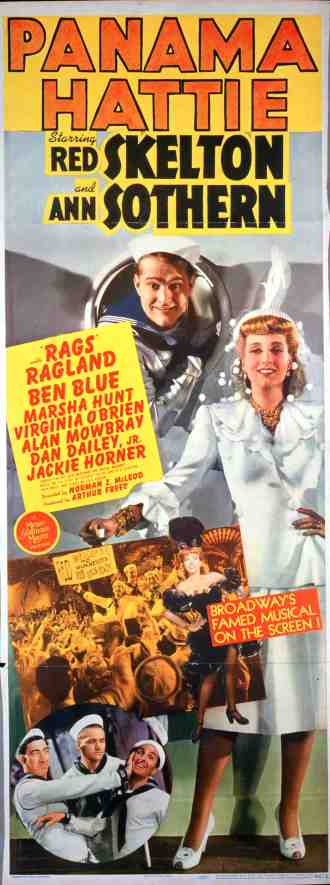 Saroyan spent his time on the MGM plot basically busying himself with visits to various productions, interspersed with drinking with Hyman, Rose, going to parties, and occasionally gambling with the likes of the legendary Nick the Greek. He did find himself small chunks of valuable work. After seeing an early edit of Freed’s Panama Hattie, he was asked if he could fix it. It’s unclear how much Saroyan worked on it. The film was famously re-edited and re-shot in the months following, though what influence Saroyan might have had on it is unknown.
He was kinda lost, but did try and get the idea of what it meant to make a picture. He spent several days visiting the set of Victor Fleming’s Tortilla Flat, based on the book by Saroyan’s friend John Steinbeck, and when Sam Zimbalist, the film’s producer, asked him for advice, Saroyan supplied some guidance.
He knew he wanted to create his own film, and that meant writing a scenario. In his journal, he noted “I think I had better write a regular play, then have a movie-writer break it down for me into scenario form. Then I will break that down or fill it out the way it should be. And then film it.”
He did have a problem: he couldn’t write in Hollywood. The party scene might have called too loudly to ignore, or maybe it was the paint smell of his room at the Beverly Wilshire. Or just plain homesickness. He needed to return to San Francisco for the holidays, and then he could start writing.
So, on December 18th, 1941, his cousin Ross Bagdasarian arrived and drove him first to Fresno, and then on to San Francisco.
“I am here for Christmas and the New Year,” Saroyan noted in his journal, “but mainly to write a movie story, or a play which can be adapted for a movie. This I myself am to produce and direct at Metro, if they like it and of course they may not, which will mean a great opportunity muffed.”
Over the course of a few weeks, he had created the story for a film that centered around a bike messenger and his family during World War II, which the US had only entered a few weeks prior.
The first reference to his writing the piece was in his journal on December 29th, 1941 - “Working along on the movie story, but a few inner set-backs”
He found that he was having some difficulties even in San Francisco, where he had written his most important works.
“First, I am going to examine the unfinished plays to see if there are any more pieces I want to salvage. Then of course the writing of the moving picture scenario. Is still ahead – the most important new project of all. This is something I have no intention of letting get away from me because of laziness.”
Despite that note, for the next several days he spent a lot of time writing letters, more than 20, and several journal pages, as well as several poems. He left San Francisco on January 3rd and visited his uncle Aram as well as enjoying dinner at a Basque restautant, possibly what is today Santa Fe Basque Restaurant and Bar. He visited with Ross, who was entering the army the next night. He returned to San Francisco, and there began the serious writing of The Human Comedy, which took roughly 10 days. He had created a set of incredibly rich characters, one of which he would call his greatest creations.
His invention was the Macauley family. The father had died and now the mother and four children had to navigate the world of Ithica Calironia, struggling to make ends meet.
This is a clear analogue to Saroyan’s own family with two significant differences. The first is the time period. While there is a universality to the characters, it is clearly set during WWII. The second, and perhaps the most striking, is that the Macauley’s are not Armenian.
 This is an interesting note because Saroyan, one of the most notable Armenians in American history at that point, had spent much of his career writing about his Armenian roots, and with a family that is so clearly drawn from his own, dead father and all, living in a town that is clearly modeled on Fresno, you’d have expected it to be an Armenian family. Perhaps he wanted to bring attention to his ability to be more than just ‘an Armenian writer’ and create a non-Armenian family that could be seen as having universal appeal. The fact that the Macauleys seems to have Scots-Irish roots only reflects something that Saroyan had been known to appreciate: the Irish. It was one of the things he admired abot Eddie Mannix in fact. He found that they were a people of “Heartiness.”
He went back and forth on the title of the book, mostly with Stanley Rose. An early contender was “O Ithica.” The Human Comedy was a reference to the massive, and never completed, series of works by Honore de Balzac, who derived the title from Dante’s The Devine Comedy. It was supposed to represent the universality of human experience, though that wasn’t quite Saroyan’s jam. He was more about documenting people’s lives as they happened in settings that were based in the world around us. Saroyan’s works, for the most part, are rooted in a time and a place. There is little that could be further from Balzac’s wide-ranging work, or Dante’s metaphysicality for that matter.
Saroyan had written The Human Comedy not quite as a script, but as a treatment or scenario. The surviving drafts, one of which is in the collection of Forever Saroyan, show a piece that is clearly meant for the screen, but reads more like a novel with inserted script sections. A typical script might run 100 pages, with a page roughly equaling one minute of screentime. The treatment has to encapsulate the entire film, as well as providing guidance as to the action and meaning of the piece. Even those treatments usually end up in the 120 to 150 range, but Saroyan’s treatment runs more than 200 pages! This gave him the space to provide a screenplay and a book’s worth of material all in one shot.
Saroyan sent two copies out: one to Rose and one to Arthur Freed. They both loved it.
He returned from his holidays in San Francisco in early February, to a meeting with Mayer, Freed, Hyman, and executive Sam Katz. The meeting was very positive and ended up with Saroyan being assigned an actual office. That was an incredibly good sign, as was the buzz around MGM saying that Saroyan had written what was going to be MGM’s next prestige picture. Saroyan himself thought that The Human Comedy was the finest story ever written for the screen, but he had not written the screenplay: only the scenario. He still planned on writing and directing and producing the film, but he was riding on the success of the treatment at the moment.
Though somewhat uncharacteristically, he had some doubts.
“The whole day has been a contest with me all worn out from boxing the boys: LB Mayer, Bernie Hyman, Sam Katz, Arthur Freed, et al, et al. Really pooped – and what’s more a little curious as to whether it is worth all the trouble.”
From that meeting, Mayer apparently formulated his plan, and on February 6th, 1942, Mayer sent over the initial contract.
The deal Mayer offered to make the picture was fairly standard for a new writer: fifty thousand for the script, and a writer, producer, and associate producer credit. This would not do for Saroyan, who came back with a letter on February 9th:
“You have been generous and patient with me and I can only hope that you will continue to be. Because now I am ready to go to work, to stay at my job, and to being a member of your great organization. I sincerely believe that good things will come of my association with you, both for myself and for Metro-Goldwyn-Mayer.” His counteroffer? 75 grand up front, fifteen hundred a week while the movie was in production, another 25 grand when shooting started, and one last twenty-five grand lump when the picture wrapped. There were various other requests, mostly about rights and credits. He wanted to be the only producer credited, and merely wanted “William Saroyan’s The Human Comedy” to be credited on the title card with no credit for any producer, writer, or director. That was highly unusual, and perhaps showed Saroyan’s lack of understanding of Hollywood business.
The response to that from Mayer was sixty thousand and one thousand a week for a full year. Bill didn’t like it, but in the end, he accepted it and gave Rose 10 grand for being his agent. He then called his mother, and they worked out a plan to distribute a bunch of money to his family. He was left with ten thousand, not a windfall, but certainly enough to live on.
Mayer set upon the task of building the team that would make The Human Comedy. Saroyan had hoped for the establishment of The Saroyan Unit, a team that would work on his projects exclusively. This was a luxury only afforded to a few in Hollywood, but Saroyan thought he was worth it.
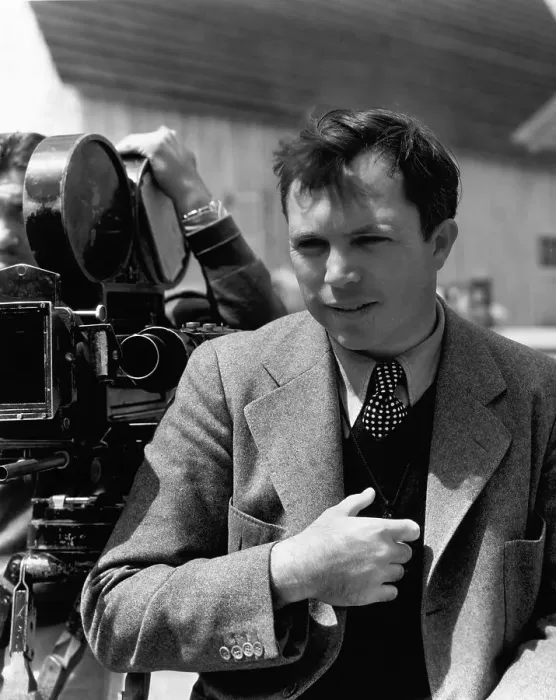 Mayer convened a meeting to get Saroyan’s feedback on the plan to produce The Human Comedy. A number of big name directors were put forward, but the biggest was King Vidor, already a legend in the industry, the man who had directed the most financially successful silent film ever, The Big Parade, and had directed the black-and-white scenes of The Wizard of Oz. Mayer settled on Vidor and when he presented that to Saroyan, Bill said that he himself was the only man who could direct his vision, and if they didn’t hire him, he would leave town. Eddie Mannix laughed at the very idea. Mayer wasn’t sure that Bill was up to the task, and as this was going to be a prestige picture, it needed a steady hand at the wheel. It was proposed that Bill should direct a short film that would serve as his bid to direct. Bill liked the idea, and chose one of his stories, A Number of the Poor, as the basis for it.
Bill, wanting a bit more money, tried to get MGM to buy the rights, but Eddie Mannix said that Saroyan would donate the story or they’d just call the whole thing off. While he had no choice but to give in, this enfuriated Saroyan, and he dedicated himself to getting even.
This was the set-up for the first of Saroyan’s produced works: The Good Job, which is where we’ll pick up on our next episode.
